


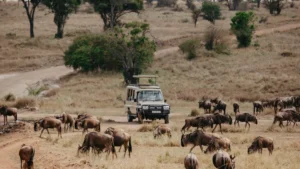

Inspired by What You See? Let’s Bring Your Journey to Life!
Reach out today, and one of our expert travel planners will be in touch within 24 hours.
About Tarangire National Park
Peak Time
June - October
Best Time To Go
Year-Round
Famous For
Large herds of elephants and ancient baobab trees
Home Of
Over 550 species of birds and diverse wildlife
Overview
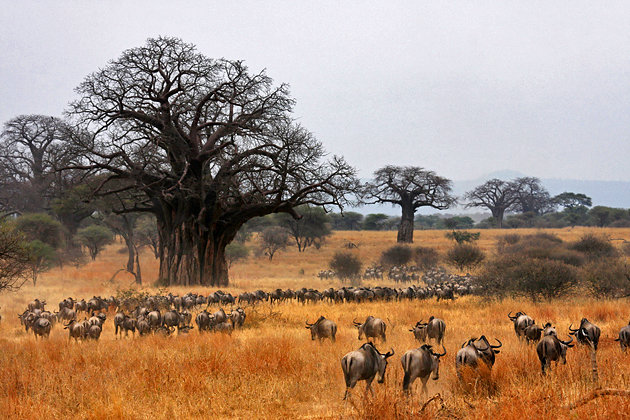
The sky over Tarangire National Park is often clear with no clouds. The park is famous for its large baobab trees. The hot sun dries the land, turning the soil dusty red. The grass becomes dry and breaks easily. The Tarangire River becomes much smaller than it is during the rainy season. Even so, many animals gather around it because it is one of the few places where water can still be found.
Wildlife
During you Safari in Tarangire, You are highly recommended to stay for a couple of days especially in the south of the park which offers a less crowded safari experience and gives you the opportunity to enjoy an authentic African feel of the Tanzania’s countryside.
Large Numbers of Wildlife
During the dry season, up to 300 elephants can be seen digging in the dry riverbed to find water underground. Many animals, including wildebeest, zebras, buffaloes, impalas, gazelles, hartebeests, and elands, gather near the remaining water sources.
Tarangire has the largest concentration of wildlife in Tanzania outside the Serengeti, including some of Africa’s largest predators. The park is one of the best places in Tanzania to see dry-country antelopes such as the fringe-eared oryx and the long-necked gerenuk.
During the rainy season, many animals spread out across a large area of about 20,000 square kilometres. They return to the river again when the land becomes dry. Elephants can be seen in Tarangire throughout the year.
Birdlife
The park’s swamps stay green all year and attract about 550 species of birds. This is one of the highest numbers of breeding bird species found in one habitat anywhere in the world.
Visitors may see:
Bird lovers may also spot colourful yellow-collared lovebirds, as well as the rufous-tailed weaver and ashy starling. These birds are found only in the dry savannah areas of north-central Tanzania.
Other animals
Old termite mounds are often home to dwarf mongooses. Red-and-yellow barbets are also common and are known for their loud, rhythmic calls.
Tarangire’s pythons sometimes climb trees. Lions and leopards can also be seen resting in tree branches, hidden among the fruits of sausage trees.
About Tarangire National Park
Size: 2,850 square kilometres (1,096 square miles)
Location: 118 kilometres (75 miles) southwest of Arusha
How to Get There
Things to Do
Tarangire can be visited all year. However, the dry season (June to October and again January to March) is the best time to see large numbers of animals.
Our safari packages typically include accommodations, meals, park entry fees, guided game drives, and transportation within the safari parks. Some packages may also include airport transfers, domestic flights, and special activities like hot air balloon rides. Please check the specific package details for more information.
We recommend packing light, breathable clothing in neutral colors, comfortable walking shoes, a hat, sunglasses, sunscreen, and insect repellent. Don’t forget your camera, binoculars, and any personal medications. A detailed packing list will be provided with your booking confirmation.
Yes, safety is our top priority. Our experienced guides are trained to handle various situations, and we follow strict safety protocols during all activities. We also recommend purchasing travel insurance that covers medical emergencies.
The best time to go on a safari depends on what you want to see. For example, the Great Migration in the Serengeti is typically best viewed between June and September. Generally, the dry season (June to October) is ideal for game viewing, while the wet season (November to May) is great for bird watching and lush landscapes.
Certain vaccinations, such as yellow fever, may be required depending on your travel itinerary. It is also recommended to have up-to-date vaccinations for hepatitis A, typhoid, and tetanus. We advise consulting with your healthcare provider for the most current recommendations.
Absolutely! We offer customizable safari packages to meet your specific interests and needs. Whether you want a focus on wildlife photography, cultural experiences, or luxury accommodations, we can tailor the safari to your desires.
You can book directly through our website by selecting your preferred safari package and filling out the booking form. Alternatively, you can contact us via email or phone for personalized assistance with your booking.
We accept various payment methods, including credit cards, bank transfers, and online payment platforms. Payment details will be provided upon booking confirmation.
Yes, we can help you plan an extended itinerary that includes other popular destinations, such as Zanzibar, Victoria Falls, or Cape Town. Let us know your preferences, and we’ll create a seamless travel experience for you.
Yes, we offer family-friendly safari packages that include accommodations and activities suitable for all ages. Our guides are experienced in creating engaging and educational experiences for children
Copyright © 2025 Natural Serenity Safari